
Congressional Debate

A docket you can run tomorrow.

12 pieces of original legislation written by CUDL in the standard format, each with the strongest line on both sides and sources to start from. Print the page and you have a session. Nobody has files on these, so the round tests thinking rather than preparation.

Written for practice. These are not NSDA docket items and will not appear at a tournament. Published September 14, 2026.

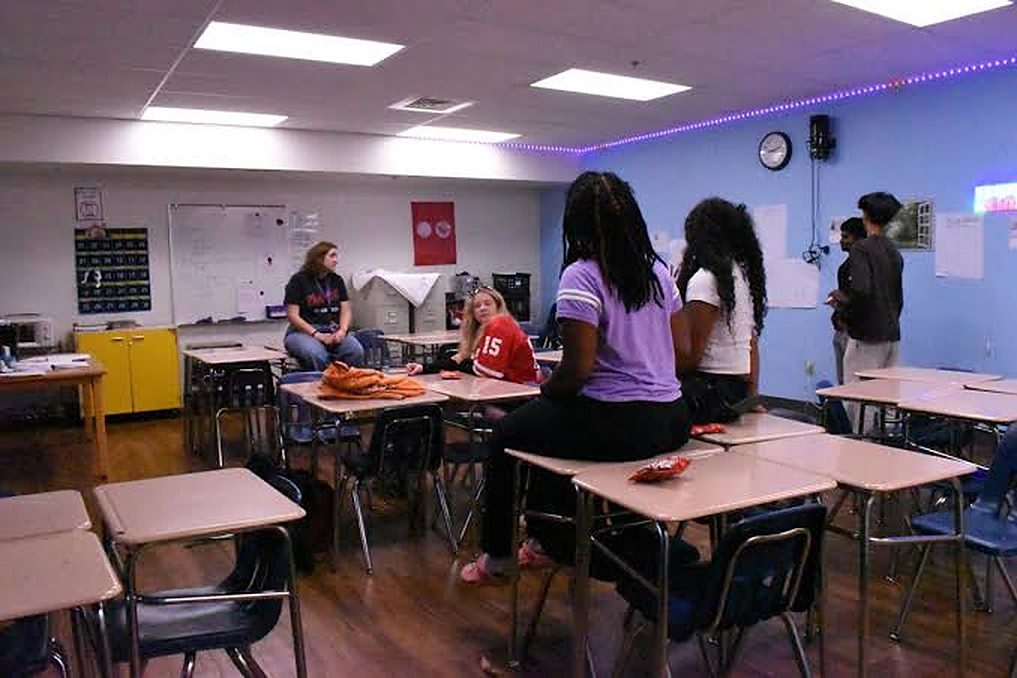
Students talking during a club meeting in a classroom

12 items

The docket

BillEnergy and technology

A Bill to Establish Federal Siting Standards for Hyperscale Data Centers

  1. SECTION 1. The Department of Energy shall establish binding siting standards for any data center with a contracted electrical load above 100 megawatts.
  2. SECTION 2. Standards shall require: (a) an interconnection study filed with the relevant grid operator before construction; (b) a cost-allocation agreement assigning grid-upgrade costs to the facility; (c) disclosure of projected annual water consumption to the host jurisdiction.
  3. SECTION 3. The Federal Energy Regulatory Commission shall administer this legislation and may deny interconnection to facilities that do not comply.
  4. SECTION 4. Implementation funds shall come from existing Department of Energy appropriations, and fees collected under Section 2 shall offset administrative costs.
  5. SECTION 5. This legislation takes effect on January 1, 2028.
  6. SECTION 6. All laws in conflict with this legislation are hereby declared null and void.

Affirmative line

Households should not pay for infrastructure built for a single customer. Standards put the cost where the load is and give grid operators time to plan.

Negative line

Siting is a state utility commission function, and thirty large-load tariffs have been adopted since 2018 without federal preemption. A federal permit layer delays projects without lowering a single rate.

Start reading

ResolutionEducation

A Resolution to Recognize Competitive Speech and Debate as a Priority Activity in Title I Schools

  1. WHEREAS, peer-reviewed studies of urban debate leagues in Chicago, Baltimore, Houston, and Boston associate participation with higher reading scores, graduation rates, and college enrollment; and
  2. WHEREAS, Title I funds may support activities that raise reading and communication achievement; and
  3. WHEREAS, students at high-poverty schools participate in competitive speech and debate at far lower rates than their peers; now, therefore, be it
  4. RESOLVED, That the Congress here assembled urges the Department of Education to issue guidance clarifying that Title I funds may support competitive speech and debate programs, and to publish participation data by school poverty level.

Affirmative line

Guidance costs nothing and removes the ambiguity that stops principals from funding a coach. Publishing participation data makes the gap visible.

Negative line

A resolution without funding changes nothing, and steering Title I money toward an extracurricular competes with reading intervention that has stronger evidence.

Start reading

BillTechnology and civil liberties

A Bill to Require Disclosure of Artificial Intelligence Use in Consequential Decisions

  1. SECTION 1. Any entity that uses an automated system as a substantial factor in a decision about employment, housing, credit, insurance, or education shall disclose that use to the affected person in writing.
  2. SECTION 2. Disclosure shall state the categories of information used and provide a route to human review within thirty days.
  3. SECTION 3. The Federal Trade Commission shall enforce this legislation and may assess civil penalties for noncompliance.
  4. SECTION 4. Funding shall come from existing Federal Trade Commission appropriations.
  5. SECTION 5. This legislation takes effect eighteen months after passage.
  6. SECTION 6. All laws in conflict with this legislation are hereby declared null and void.

Affirmative line

People denied a job or a loan by a model cannot contest a decision they do not know was made. Disclosure and human review are the minimum.

Negative line

Substantial factor is undefined, compliance falls hardest on small firms, and several states already require this. Federal duplication adds cost without adding protection.

Start reading

BillEducation and health

A Bill to Condition Federal Education Funds on Later Secondary School Start Times

  1. SECTION 1. No high school receiving federal education funds shall begin instruction before 8:30 a.m. local time.
  2. SECTION 2. The Department of Education shall administer this legislation and may grant a two-year waiver to districts demonstrating transportation hardship.
  3. SECTION 3. Districts may apply for transportation transition grants from existing Department of Education appropriations.
  4. SECTION 4. This legislation takes effect at the start of the 2029-30 school year.
  5. SECTION 5. All laws in conflict with this legislation are hereby declared null and void.

Affirmative line

Adolescent sleep research is consistent, and the districts that moved start times report better attendance and fewer teen crashes.

Negative line

Bus fleets, athletics, and working families set start times together. A federal mandate on a local scheduling decision is the wrong tool, and the waiver process will swallow the rule.

Start reading

BillInfrastructure

A Bill to Fund Rural Broadband Deployment Through Spectrum Auction Proceeds

  1. SECTION 1. Proceeds from federal spectrum auctions conducted after the passage of this legislation shall be deposited in a Rural Connectivity Fund.
  2. SECTION 2. The Fund shall issue grants for last-mile broadband construction in census blocks where no provider offers service at 100 megabits per second download and 20 megabits per second upload.
  3. SECTION 3. The Federal Communications Commission shall administer the Fund and shall publish grantee performance data annually.
  4. SECTION 4. Grants shall require a five-year service commitment and open-access provisions on funded infrastructure.
  5. SECTION 5. This legislation takes effect upon passage.
  6. SECTION 6. All laws in conflict with this legislation are hereby declared null and void.

Affirmative line

Spectrum proceeds are a one-time windfall from a public asset. Spending them on the households that asset cannot reach is the right use.

Negative line

Existing programs already fund this and have underspent. Adding a fund without fixing mapping and permitting repeats the failure.

Start reading

BillHealth care

A Bill to Prohibit the Reporting of Medical Debt to Consumer Credit Agencies

  1. SECTION 1. No consumer reporting agency shall include medical debt in a consumer credit report, and no creditor shall furnish medical debt for inclusion.
  2. SECTION 2. Medical debt means an obligation arising from the receipt of health care services, products, or devices.
  3. SECTION 3. The Consumer Financial Protection Bureau shall enforce this legislation.
  4. SECTION 4. Funding shall come from existing Consumer Financial Protection Bureau appropriations.
  5. SECTION 5. This legislation takes effect one year after passage.
  6. SECTION 6. All laws in conflict with this legislation are hereby declared null and void.

Affirmative line

About one hundred million people carry medical debt, and unlike other debt it is rarely a choice. A credit score should not punish an emergency room visit.

Negative line

Removing information from credit reports raises the cost of credit for everyone and does not cancel a dollar of debt. Address the prices instead.

Start reading

BillEducation

A Bill to Establish a Federal Grant Program for High School Civics Instruction

  1. SECTION 1. The Department of Education shall establish a competitive grant program supporting one full year of civics instruction in public high schools.
  2. SECTION 2. Eligible uses include teacher training, classroom materials, simulations of legislative and judicial processes, and competitive speech and debate programs.
  3. SECTION 3. Priority shall be given to schools where at least fifty percent of students qualify for free or reduced-price meals.
  4. SECTION 4. Funding shall come from an annual appropriation of not more than $200 million, drawn from existing Department of Education discretionary funds.
  5. SECTION 5. This legislation takes effect at the start of the next fiscal year.
  6. SECTION 6. All laws in conflict with this legislation are hereby declared null and void.

Affirmative line

Civic knowledge is measured and low, and the schools with the least of it are the ones without the staffing to teach it. Grants target them.

Negative line

Curriculum is a state responsibility, competitive grants reward districts with grant writers, and a year of civics displaces another requirement.

Start reading

ResolutionForeign policy and defense

A Resolution to Urge a Binding International Agreement on Autonomous Weapons Systems

  1. WHEREAS, weapons systems capable of selecting and engaging targets without human intervention are in development; and
  2. WHEREAS, existing international humanitarian law assumes a human decision maker accountable for the use of force; and
  3. WHEREAS, discussions at the United Nations have not produced a binding instrument; now, therefore, be it
  4. RESOLVED, That the Congress here assembled urges the President to seek a binding international agreement requiring meaningful human control over the use of lethal force, and to support verification measures adequate to enforce it.

Affirmative line

Accountability requires a person who decided. Without an agreement, the capability spreads and the norm never forms.

Negative line

An agreement adversaries will not sign constrains only the country that signs it. Meaningful human control has no agreed definition, which makes verification impossible.

Start reading

BillHousing and education

A Bill to Create a Federal Tax Credit for Teacher Housing Near High-Need Schools

  1. SECTION 1. A refundable tax credit of up to $6,000 per year shall be available to full-time public school teachers who rent or own a residence within ten miles of a school where at least fifty percent of students qualify for free or reduced-price meals.
  2. SECTION 2. The credit shall be available for no more than five consecutive years per teacher.
  3. SECTION 3. The Internal Revenue Service shall administer this legislation.
  4. SECTION 4. Funding shall come from general revenue.
  5. SECTION 5. This legislation takes effect for the tax year beginning after passage.
  6. SECTION 6. All laws in conflict with this legislation are hereby declared null and void.

Affirmative line

High-need schools lose teachers to commute and cost. A credit tied to proximity keeps experienced teachers in the buildings that need them most.

Negative line

A demand-side subsidy in a supply-constrained market raises rents. Pay teachers more and let them choose where to live.

Start reading

BillEnergy

A Bill to Streamline Licensing for Advanced Nuclear Reactors

  1. SECTION 1. The Nuclear Regulatory Commission shall establish a technology-inclusive licensing pathway for advanced reactor designs with a decision deadline of twenty-four months from a complete application.
  2. SECTION 2. Designs previously approved by the Commission may be licensed at additional sites through an expedited review addressing only site-specific factors.
  3. SECTION 3. The Commission shall publish the reason for any decision that exceeds the deadline in Section 1.
  4. SECTION 4. Funding shall come from license application fees and existing Commission appropriations.
  5. SECTION 5. This legislation takes effect one year after passage.
  6. SECTION 6. All laws in conflict with this legislation are hereby declared null and void.

Affirmative line

Firm carbon-free power needs a licensing process that finishes. Deadlines and design reuse cut years without cutting safety review.

Negative line

Deadlines pressure a safety regulator, and the industry's delays come from cost and supply chains, not paperwork. One accident ends the industry.

Start reading

BillEducation and finance

A Bill to Establish Service Standards for Federal Student Loan Servicers

  1. SECTION 1. Any contractor servicing federal student loans shall answer borrower inquiries within ten business days and shall apply payments to the borrower's stated preference.
  2. SECTION 2. Servicers shall provide a single annual statement listing balance, interest paid, repayment plan, and eligibility for income-driven plans and forgiveness programs.
  3. SECTION 3. The Department of Education shall reduce contract compensation for servicers failing these standards and shall publish compliance data quarterly.
  4. SECTION 4. Funding shall come from existing Department of Education appropriations.
  5. SECTION 5. This legislation takes effect one year after passage.
  6. SECTION 6. All laws in conflict with this legislation are hereby declared null and void.

Affirmative line

Borrowers lose forgiveness eligibility because of servicer error. Standards and published data make the contractor accountable to the person paying.

Negative line

Adding penalties to contracts raises servicing costs, paid from the same appropriation, and the underlying problem is a repayment system too complicated to explain in one statement.

Start reading

BillJustice

A Bill to Encourage Automatic Sealing of Juvenile Records

  1. SECTION 1. The Department of Justice shall establish a grant program supporting states that automatically seal juvenile adjudication records upon a person's twenty-first birthday, absent an adjudication for a violent offense.
  2. SECTION 2. Participating states shall report the number of records sealed and the cost of implementation annually.
  3. SECTION 3. Funding shall come from an annual appropriation of not more than $50 million from existing Department of Justice discretionary funds.
  4. SECTION 4. This legislation takes effect at the start of the next fiscal year.
  5. SECTION 5. All laws in conflict with this legislation are hereby declared null and void.

Affirmative line

Records follow young people into job and housing applications long after the sentence ends. Automatic sealing removes the paperwork barrier that petitions create.

Negative line

Sealing is a state criminal justice decision, employers in sensitive fields need the information, and a grant program pays states to do what many already do.

Start reading

Running a session with this docket

  1. Print the page or put it on a projector. Assign each student one bill to prepare on each side.
  2. Elect a presiding officer and set the agenda by vote.
  3. Run the standard cycle: authorship speech with two minutes of questioning, then alternating speeches with one minute each.
  4. Use the timer on the Congress setting and the digital flow Congress sheet to track speakers.
  5. Vote, then debrief: which speeches moved the chamber, and why.

The Congress guide covers precedence, recency, motions, and speech structure.

Writing your own

A bill needs a title beginning with "A Bill to", numbered sections stating what it does, who administers it, how it is funded, when it takes effect, and a clause resolving conflicts with existing law. A resolution uses whereas clauses and a single resolved clause, and it urges rather than enacts. Keep it to one page and one idea.

The NSDA publishes a sample docket on the first of each month at speechanddebate.org/topics. Read several before writing your own, then submit yours to the tournaments your school enters.

New legislation by email

When we add to the docket, about once a topic period.

Want a Congress workshop at your school?

CUDL coaches run chamber sessions at partner schools, including the presiding officer training most clubs skip.